January 2026: Seller Dominance Continues in Greater Tokyo Second-hand ApartmentsA · FULL TRANSLATION
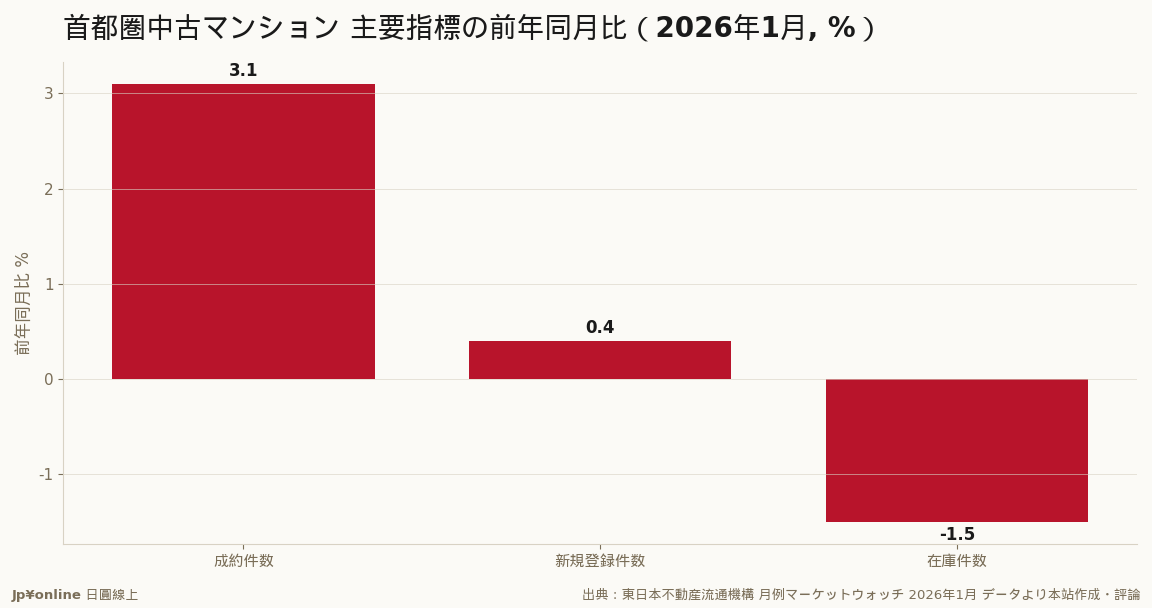
- 3,343 completed deals (up 3.1% year-on-year) for a continuous 15th month of positive growth
- Inventory reduced by 1.5% to 44,776 units for a sixth consecutive month; new listings increased by only 0.4% - supply-side imbalance
- Seller dominance: stable buyer interest vs. seller hesitation to sell driving up prices
- Counter-argument: January is traditionally slow, new listings pause indicates reduced liquidity risk, and second-hand sensitive to rising rates
- Relevance for Taiwanese readers: low negotiation space in the market, existing inventory as a selling opportunity, use listing numbers as early indicators
In January 2026, the second-hand apartment market in the Greater Tokyo Area maintained seller dominance. With 3,343 completed deals (up 3.1% year-on-year) for a continuous 15th month of positive growth, and inventory reduced by 1.5% to 44,776 units for a sixth consecutive month, new listings only increased by 0.4%. Buyers continued to enter the market while sellers were hesitant to sell, driving prices up. The average transaction price was 54,930,000 yen (continuing to be high), with 1,752 transactions in Tokyo at over 60,000,000 yen per unit.
【Conclusion First】In January 2026, the Greater Tokyo second-hand apartment market continued to favor sellers: there were 3,343 completed deals (up 3.1% year-on-year) for a 15th consecutive month of positive growth; inventory was reduced by 1.5% year-on-year to 44,776 units for a sixth consecutive decrease. New listings only increased by 0.4%, virtually no additional supply. Buyers continued to enter the market while sellers were hesitant to sell, driving down available options and maintaining seller dominance in the market. For Taiwanese readers considering buying or selling second-hand apartments in Greater Tokyo, these numbers are essential for assessing negotiation space and timing of entry and exit.
【Breaking Down the Indicators】 - **Completed Deals**: Number of actual transactions completed (buyer interest indicator) - **New Listings**: Number of new listings available on the market (supply indicator) - **Inventory**: Total number of existing unsold properties in the market; lower inventory indicates fewer options and seller dominance. In January 2026, there were 3,343 completed deals (up 3.1% year-on-year) for a continuous positive trend over 15 months, indicating sustained buyer interest. The average transaction price was 54,930,000 yen, continuing to be high; in Tokyo, 1,752 units sold at over 60,000,000 yen per unit.
【Dissecting the Data: Robust Demand, Insufficient Supply】The key is not the growth rate but the imbalance between demand and supply. On one hand, there has been a continuous increase in completed deals for 15 months with stable buyer interest; on the other hand, new listings increased by only 0.4% year-on-year, virtually no additional supply, leading to reduced inventory over six consecutive months at a rate of 1.5% per year. Buyers continue to enter while sellers are reluctant to sell, driving down available options and maintaining seller dominance in the market.
【Counter-Argument】Three reminders: First, January is traditionally a slow period for transactions; an increase of 3.1% does not indicate significant buying activity. Second, a pause in new listings indicates strong seller sentiment but also reduced liquidity risks — it may be harder to sell quickly when needed. Third, second-hand apartments are sensitive to interest rates, and with Japan entering an interest rate hike cycle, higher mortgage rates could reduce buyer affordability more quickly than indicated by current data.
【Relevance for Taiwanese Readers】First, the market is still a seller’s market: low inventory and high prices mean that chasing price increases comes with risk; do not assume it will only go up. Second, if you own second-hand apartments in Greater Tokyo, stable buyer interest and limited inventory provide an opportunity to consider selling as a relatively sweet spot for profit-taking. Third, use the number of existing listings and new listings as early indicators of market shift from seller to buyer dominance.
【What to Watch】First, whether completed deals can continue their positive trend will test buyer persistence. Second, increased new listings may signal supply-side pressures that could lead to price drops. Lastly, the Bank of Japan’s interest rate and mortgage cost trends will determine how long this seller’s market lasts.