Tokyo 23 Wards New Built Apartments: Prices Soar, Sales LagA · FULL TRANSLATION
- December 2025: Average apartment price ¥846.9 million (+15.5%, 8 consecutive months up)
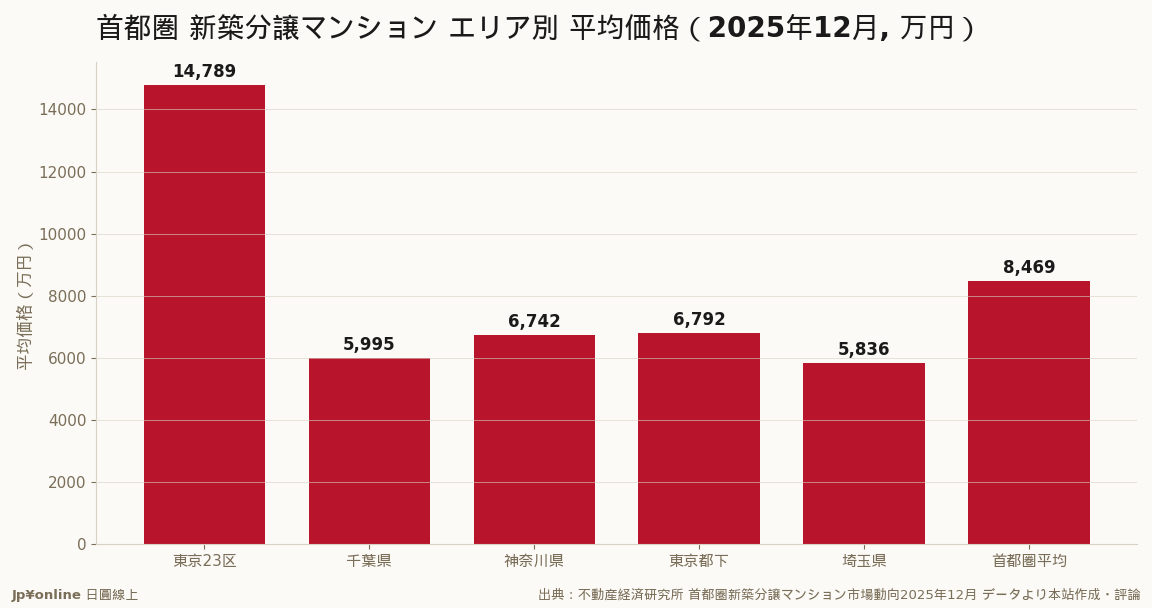
- Central Tokyo 23 wards average price ¥1.4789 billion (+36.7%)
- Only 5,468 units sold (-6.0% annually, down for 3 consecutive months)
- Initial contract rate at 63.1%, below the economic turning point of 70%
- Inventory increased to 6,976 units in December from 5,733 in late November
- Price hikes outpace sales volumes; developers favor higher-priced projects
- Buyers face limited options for affordable central Tokyo apartments
In December 2025, the Greater Tokyo Area’s new built apartments highlighted the paradox of rising prices and declining sales. The average price hit ¥846.9 million (up 15.5% annually), with a consecutive eight-month increase. In central Tokyo's 23 wards, it soared to ¥1.4789 billion (a 36.7% year-on-year rise). Meanwhile, only 5,468 units were launched for sale, down 6.0% from the previous year and a third consecutive monthly decline. The initial month contract rate fell to 63.1%, below the economic turning point of 70%. Inventory rose to 6,976 units by the end of December, up from 5,733 in late November.
The analysis concludes that the Greater Tokyo Area’s new built apartment market faced a paradox: prices surged while sales lagged. In December 2025, average apartment prices hit ¥846.9 million (up 15.5% annually) for a consecutive eight-month increase; central Tokyo's 23 wards saw an even steeper rise to ¥1.4789 billion (a 36.7% year-on-year increase). However, the number of units sold decreased by 6.0%, down for three consecutive months, with only 63.1% of initial contracts completed, below the economic turning point of 70%. Prices continued to rise despite a decline in sales volumes.
The key takeaway is that central Tokyo’s high prices disproportionately influenced the overall average price, which was significantly higher than surrounding prefectures like Saitama and Chiba (approximately ¥60 million). This suggests that while buyers face high prices in central Tokyo, they have more affordable options in surrounding areas. Additionally, inventory levels increased as unsold units piled up.
Critics caution against relying on the average price, which can be skewed by a few ultra-high-end projects. Lower sales volumes do not necessarily indicate a decline in demand but could reflect selective selling strategies from developers.