Japan May Core CPI Down 4 Months in a Row Below 2% — But Core Core Stays at 1.8%, No Reason for BoJ to EaseA · FULL TRANSLATION

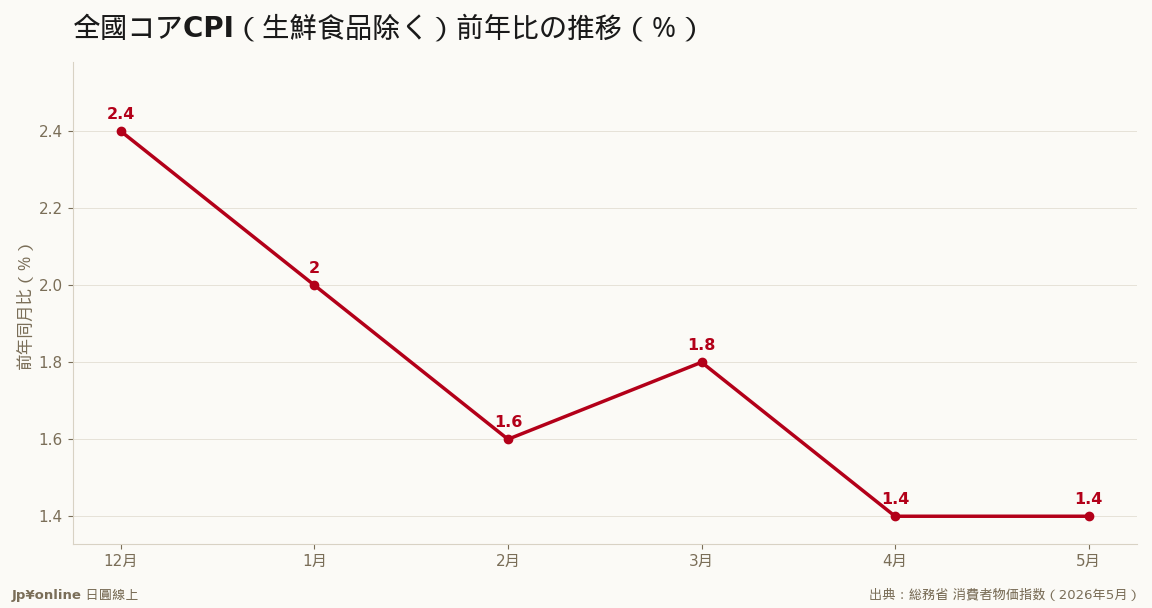
- 2026 May Nationwide CPI: Comprehensive +1.5% / Core (no fresh produce) +1.4% (unchanged since April, below 2% since February) / Core Core (excluding fresh produce and energy) +1.8%
- Surface cooling with underlying heat: Core including energy +1.4% vs. Core Core excluding energy +1.8%, a difference of 0.4 percentage points indicates subsidies on electricity and gas are depressing surface numbers while the underlying trend remains around 2%
- Unique perspective: Don't just focus on Core; compare it with Core Core to filter out policy noise — when Core is lower than Core Core, energy subsidies and oil prices are pulling down surface numbers, underlying trends remain hot (as in May); BoJ watches Core Core for inflationary base trend
- Who it matters to: Those waiting for yen appreciation (sticky underlying trend supports hawkish BoJ stance), homeowners (interest rate pressures not resolved), inbound tourists (subsidies mainly impact electricity and gas bills)
- Practical Application for Taiwanese Readers: Judge BoJ interest hikes based on Core Core rather than whether Core breaks 2%, subsidies exiting will lead to Core rebound, yen and mortgage rates follow BoJ and Core Core
The Ministry of Internal Affairs and Communications (MIC) released the nationwide CPI for Japan in May 2026: Comprehensive CPI at 113.5 (+1.5% YoY), Core CPI (-fresh produce excluded) at 113.0 (+1.4%, unchanged from April, having stayed below 2% since February), and Core Core CPI (excluding fresh produce and energy) at 112.0 (+1.8%). A surface cooling with persistent underlying heat: while the Core index including energy rose by 1.4%, without energy it increased by 1.8%, a difference of 0.4 percentage points, indicating government subsidies on electricity and gas are depressing the headline figure but the underlying trend remains at about 2%. Exclusively: When analyzing Japan's inflation, focus solely on Core does not provide a complete picture — you must also compare it with Core Core to filter out policy noise. A Core lower than Core Core shows that energy subsidies and oil prices are pushing down the surface numbers while underlying trends remain hot (as in May). The BoJ is watching Core Core for signs of inflationary pressure.
【Why This Matters to Taiwanese Readers】The Ministry of Internal Affairs and Communications released the nationwide Consumer Price Index (CPI) in Japan for May 2026. After excluding fresh produce, the Core CPI was 113.0 (+1.4% YoY), unchanged from April and having stayed below 2% since February. But when energy is also excluded, the Core Core CPI rose to 1.8%, up by 0.4 percentage points compared with the surface Core. For Taiwanese readers monitoring interest rates, currency trends, and mortgage rates in Japan, this set of figures determine one thing: while inflation may seem to have cooled on the surface, the underlying trend is still hot, giving no reason for the BoJ to ease policy.
【Decoding the Numbers】CPI has three layers. Understanding each layer prevents being misled by a single number. The first layer, Comprehensive CPI at 113.5 (+1.5%), includes fresh produce and is heavily influenced by fluctuations in vegetable and fruit prices. The second layer, Core CPI (-fresh produce) at 113.0 (+1.4%) — this is the most commonly cited core index used by Japanese media and markets. The third layer, Core Core CPI (-fresh produce and energy) at 112.0 (+1.8%), further excludes energy (electricity, gas, oil), reflecting the underlying trend free from subsidies and fluctuations in oil prices. In May, the key was that while Core CPI including energy rose by only 1.4%, Core Core CPI excluding energy reached 1.8%. The difference indicates that government subsidies on electricity and gas are driving down surface numbers, but the underlying trend is still rising at about 2%.
【A Unique Methodology: Don’t Just Focus on Core; Compare with Core Core to Filter Out Policy Noise】Many people look only at the single Core number for Japan’s inflation and mistakenly interpret a low point caused by subsidies as genuine cooling. The correct approach is to compare Core CPI with Core Core CPI side-by-side: when Core CPI is lower than Core Core (as in May, 1.4% vs 1.8%), it indicates that energy subsidies and oil prices are pulling down the surface numbers while underlying trends remain hot; conversely, if Core CPI exceeds Core Core, this likely means that high oil prices are pushing up the surface figures and underlying inflation is not as strong. May falls into the former category — policy is targeting the surface while underlying trends remain robust, which is exactly what the BoJ considers when assessing the overall inflationary trend.
【Opportunities and Risks】For those holding Japanese assets or waiting for the yen to strengthen, an underlying sticky trend coupled with a sustained hawkish stance from the BoJ could be supportive of the yen. For Japanese homeowners (including Taiwanese owning properties in Japan), continued upward pressure on interest rates means mortgage costs remain risky. For inbound tourists, subsidies primarily impact household bills like electricity and gas rather than dining and accommodation expenses.
【Practical Application for Taiwanese Readers】Firstly, to gauge BoJ moves, focus not just on whether Core CPI breaks 2%, but on whether there is any loosening in Core Core — this is the true bottom-line figure the BoJ is watching. Secondly, energy subsidies are a policy tool; their reduction or exit will result in an upward rebound for Core CPI, so do not mistake temporary low points as trends. Thirdly, movements in the yen and mortgage rates follow the BoJ and Core Core CPI; this transmission chain is worth tracking over the long term.
【Next Steps to Watch】First, observe any changes in subsidy request months from June that might cause a rebound in Core CPI; second, see if Core Core can stabilize around 1.8%, or continue to decline; third, monitor summer electricity and food prices, as these are the most likely factors to pull surface figures apart from underlying trends.