Japan April Trade Surges by 14.8% Month-over-Month, but Weak Yen and Pre-Trade Effects Drive the FiguresA · FULL TRANSLATION
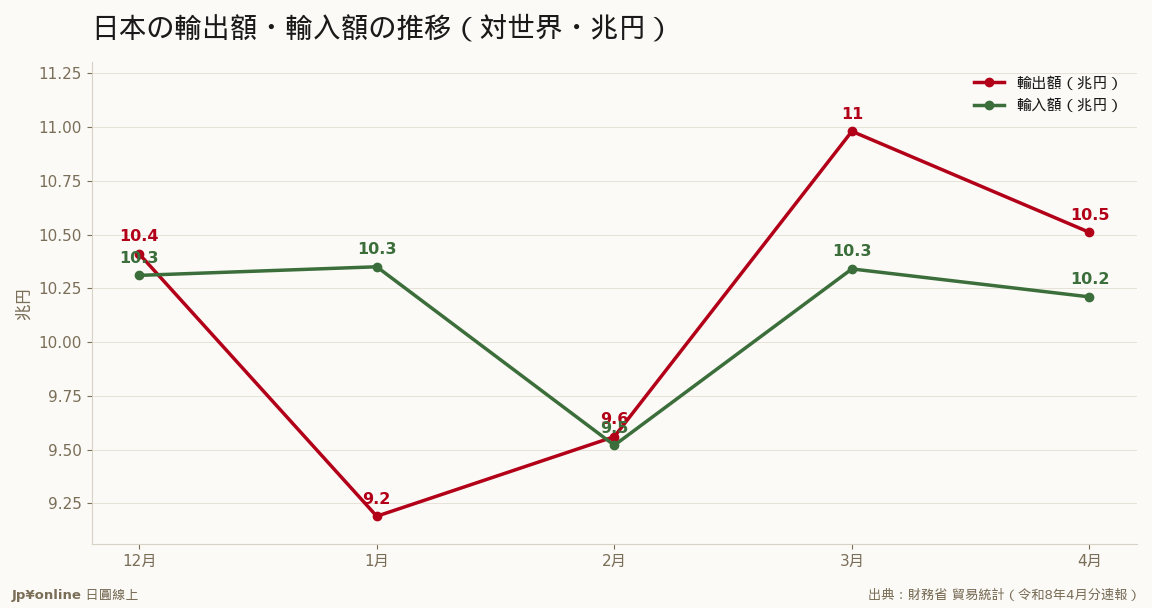
- Exports surged by 14.8% year-on-year to ¥10.5073 trillion in April with eight consecutive months of growth.
- Weak yen and pre-shipment effects drive the increase, as quantity index only rose by 3.4%. Seasonally adjusted exports grew by just 1.4%.
- Trade surplus reached ¥301.9 billion for three consecutive months, up from a deficit.
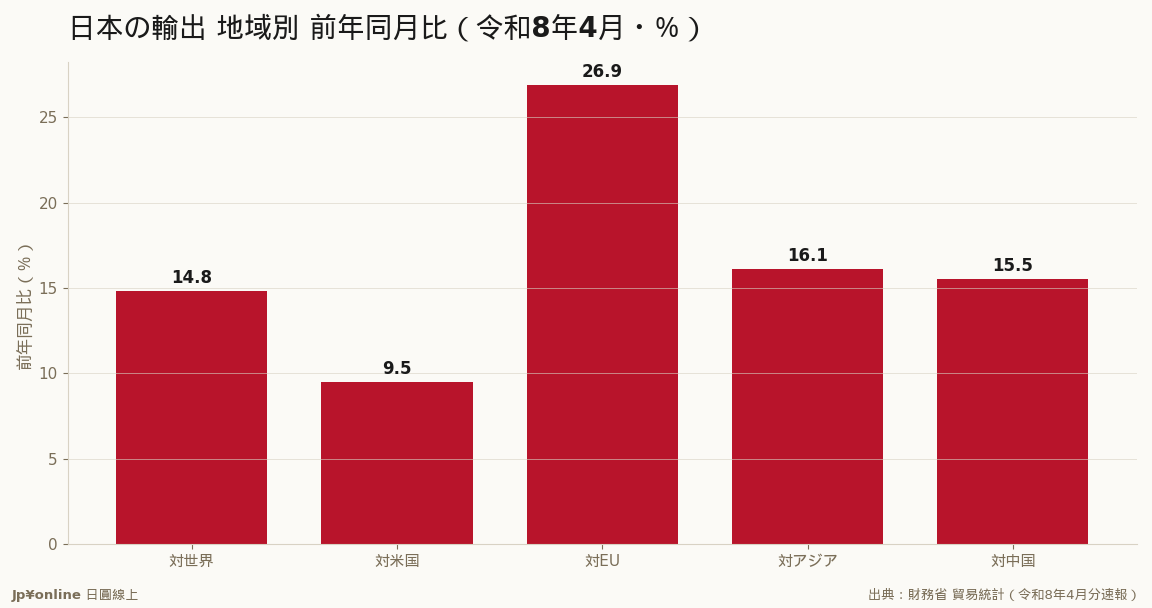
- Growth across all regions: EU +26.9%, Asia +16.1%, China +15.5%, USA +9.5%
- Semiconductor parts are major components of both exports and imports, closely linked to Taiwanese manufacturers.
The Ministry of Finance released the April trade statistics for Reiwa 8 (2026): exports increased by 14.8% year-on-year to ¥10.5073 trillion, with eight consecutive months of growth; imports grew by 9.7% to ¥10.2054 trillion. The trade surplus rose to ¥301.9 billion for the third consecutive month. However, this strong performance is largely due to a weak yen and pre-shipment effects ahead of tariffs on US goods.
**Conclusion:** The Ministry of Finance reported that Japan’s April trade statistics (preliminary) showed exports increased by 14.8% year-on-year to ¥10.5073 trillion, marking eight consecutive months of growth; imports grew by 9.7% to ¥10.2054 trillion; and the trade surplus rose to ¥301.9 billion for a third straight month. While it appears as strong export data with a trade surplus, much of this increase is due to the weak yen and pre-shipment effects ahead of US tariffs.
**Key Metrics:** - Exports increased by 14.8% year-on-year to ¥10.5073 trillion; exports index rose only 3.4% - Seasonally adjusted exports grew by 1.4%, imports fell slightly, and the adjusted surplus was ¥236.5 billion - Growth across all regions: EU +26.9%, Asia +16.1%, China +15.5%, USA +9.5% - Semiconductor parts are a major component of both exports and imports, closely linked to Taiwanese manufacturers
**Analysis:** - The gap between amount growth (14.8%) and quantity index (3.4%) suggests much of the increase is due to higher prices and weak yen effects. - Seasonally adjusted numbers show modest growth in exports despite strong nominal increases. - For Taiwan, this highlights the importance of monitoring both trade volume and exchange rate impacts on order cycles and exchange rates between Japan and Taiwan.