Monthly Report: Vacation Rentals Hit 1.724 Million Guests in February-March, Up 43% Year-on-YearA · FULL TRANSLATION
- Total overnight stays reached approximately 1.724 million, up 143.0% year-on-year; while hotel stays increased only 2% over the same period.
- Guests numbered around 629,216: Japanese guests accounted for 42.2%, with a noticeable increase from the previous period (36.3%), driven by spring break and end-of-snow season travel; foreign guests made up 57.8% of the total.
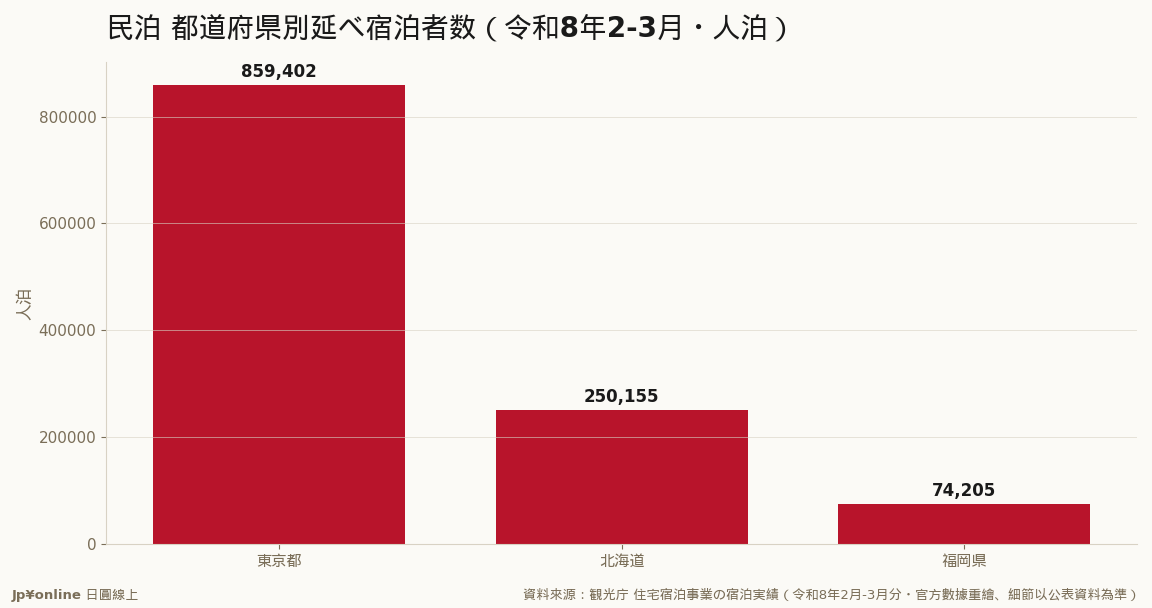
- Tokyo hosted about 859,402 overnight stays, accounting for nearly half of the national total; Hokkaido had 251,550, while Fukuoka saw 74,205 — indicating a continued concentration in one region.
- The number of registered properties increased by approximately 1,000 to 40,585 over two months, with a cumulative total of 61,605 and 22,030 cancellations — reflecting the high turnover nature of the market.
- Volume comparison: Vacation rentals hit 1.724 million guests in two months vs hotels at around 49 million per month; high growth due to low base but consistent with visitor trends (nearby regions and Europe/America).
- For Taiwanese readers, consider both net increases and cancellations when investing in vacation rentals; Tokyo's dominance also means higher regulatory risks.
The latest report from the Ministry of Tourism on residential rental accommodations for February-March of this year shows a record-breaking total of approximately 1.724 million overnight stays, up 143% year-on-year. This contrasts with hotel stays which only increased by around 2%. The shift in guest nights from hotels to vacation rentals supports the 'diversion hypothesis' with official data. Guests numbered around 629,216: Japanese guests made up 42.2%, showing a noticeable increase compared to the previous period (36.3%), driven by spring break and end-of-snow season travel; foreign guests accounted for 57.8% of the total, with top countries being South Korea, the United States, Taiwan, China, and Australia.
Conclusion first: The records of vacation rentals have set a new high. For February-March this year, the latest report from the Ministry of Tourism on residential rental accommodations shows approximately 1.724 million overnight stays, up 143% year-on-year. During the same period, hotel stays saw foreign guests increase by only around 2%. The shift in guest nights from hotels to vacation rentals adds another layer of evidence for the 'diversion hypothesis.'
Breaking down the numbers: Guests numbered approximately 629,216, with Japanese guests accounting for 42.2% and foreign guests making up 57.8%. This indicates an increase in domestic travel during spring break and end-of-snow season, bringing more local tourists into vacation rentals. The top five countries by nationality were South Korea (No. 1), the United States (No. 2), Taiwan (No. 3), China (No. 4), and Australia (No. 5), accounting for 53.3% of total foreign guests, consistent with hotel trends towards nearby regions and Europe/America.
Tokyo continues to dominate: Tokyo hosted about 859,402 overnight stays, accounting for nearly half of the national total; Hokkaido had 251,550 (supported by snow season travel), while Fukuoka saw 74,205. Compared to the previous period, Tokyo's numbers decreased slightly, but Hokkaido and Fukuoka continued to grow, indicating a continued concentration in one region. Supply-side expansion: The number of registered properties increased from 39,575 at the beginning of March to 40,585 by the end of March, an increase of approximately 1,000 over two months; with a cumulative total of 61,605 and 22,030 cancellations as of March 13 — indicating high turnover in the market.
Placing vacation rentals within the broader context: The gap between foreign guests staying at hotels (-13.4%) and JNTO's reported visitor numbers (-3.6%) is now 10 percentage points, a topic we explored in our previous analysis. Among these, hypothesis 2 'diversion' has received direct support from official data — vacation rentals are not included in the hotel stay statistics survey. The +43% increase in guest nights on hotels is essentially invisible.
For Taiwanese readers: First, when investing in vacation rental properties, consider both net increases and cancellations; don't just focus on the 43% demand side. Second, Tokyo's dominance also means higher regulatory risks. Third, Taiwan remains the third-largest market for tourists, with low-cost localization efforts like simplified Chinese pages and LINE communication being natural advantages for Taiwanese owners. What to watch next: 1) The report for April-May of this year; can vacation rentals continue their growth amid the backlash against them? 2) After the second quick report on hotel stays in July, will the gap narrow? 3) With over 60,000 registered properties, how might regulatory discussions change?