Tokyo Asking vs. Inquiry Prices, 2026Q2: The Gap on Used Condos Widens to ¥45.7M — Sellers Ask 64% More Than Buyers Shop For
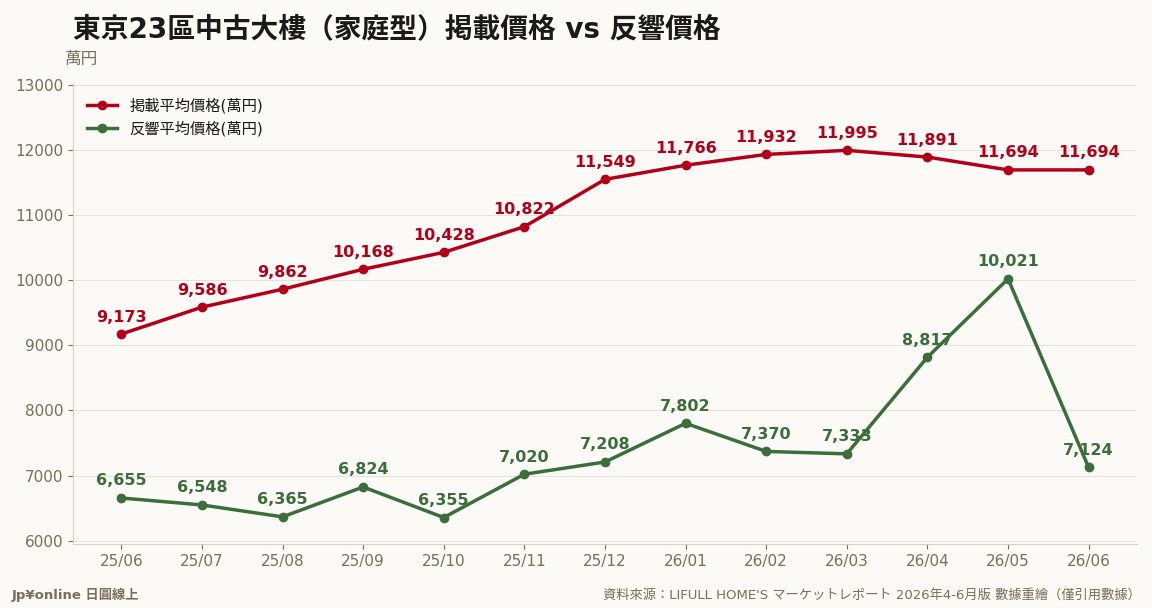
- June 2026, Tokyo 23 wards family-type used condos: average listed (asking) price ¥116.94M (+27.5% YoY) vs. average inquiry price ¥71.24M (+7.0%) — a ¥45.7M gap, 64% above what buyers actually inquire about
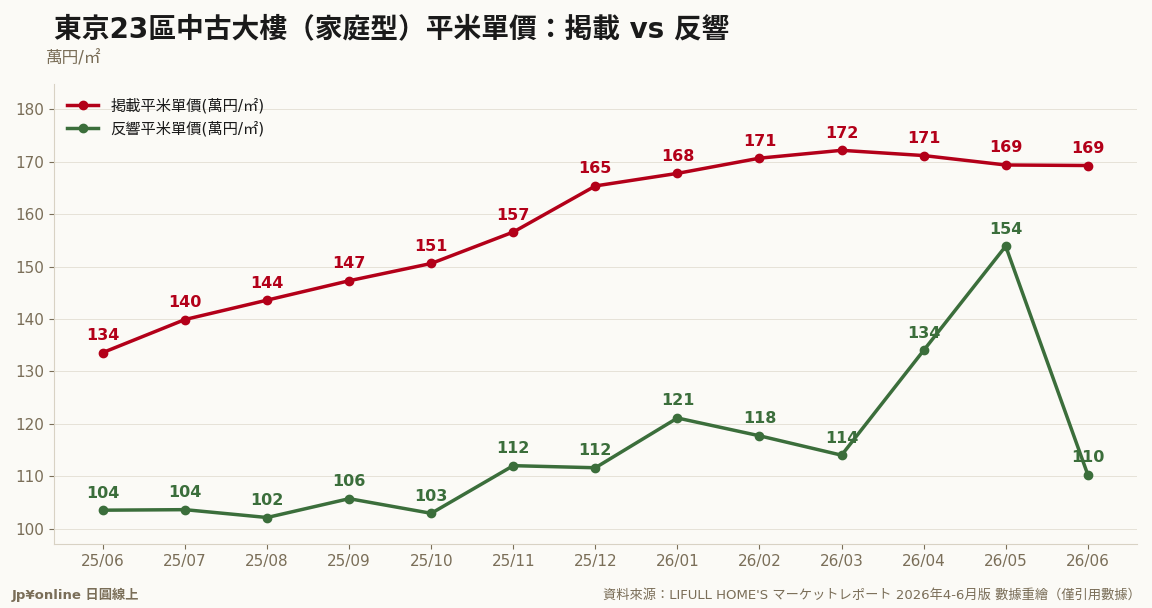
- The gap was ¥25.2M a year earlier and just ¥1.66M when the data series began in January 2020; per-sqm prices show the same split (¥1.693M vs. ¥1.103M)
- Context: REINS data shows closed transactions in Tokyo wards running below prior-year levels since January 2026, while the BOJ's June hike — the highest rates in 31 years — turned 57.4% of surveyed buyers cautious
- Neither figure is a closed price: listed = seller ask, inquiry = what users contact agents about; the spread is a direct gauge of seller expectations vs. buyer budgets, tracked quarterly in this series
This is the first issue of our quarterly series tracking Tokyo's asking-versus-inquiry price gap, built on a dual metric unique to LIFULL HOME'S: listed prices (what sellers ask) versus inquiry prices (what buyers actually contact agents about). In June 2026, family-type used condominiums in Tokyo's 23 wards listed at an average of ¥116.94 million, up 27.5% year on year, while the average price of units buyers inquired about was ¥71.24 million, up just 7.0%. The spread is ¥45.7 million — sellers ask 64% more than buyers shop for. A year ago the gap was ¥25.2 million; when the series began in January 2020 it was ¥1.66 million. Per-square-meter figures tell the same story: ¥1.693 million listed versus ¥1.103 million inquired. The backdrop matters: REINS data shows closed deals in Tokyo's wards running below year-earlier levels every month since January 2026, inventory is piling up, and after the Bank of Japan's June rate hike 57.4% of prospective buyers surveyed said they had turned cautious. For overseas investors, the lesson is to read both numbers: asking prices describe sellers' hopes, inquiry prices describe buyers' budgets — and the distance between them is now measured in tens of millions of yen. (Data cited from LIFULL HOME'S Market Report; commentary ours.)