Japan Domestic Travel Spending Q2 2026: 7.54T Yen, +11.7% YoY, Lodging 5.96TA · FULL TRANSLATION
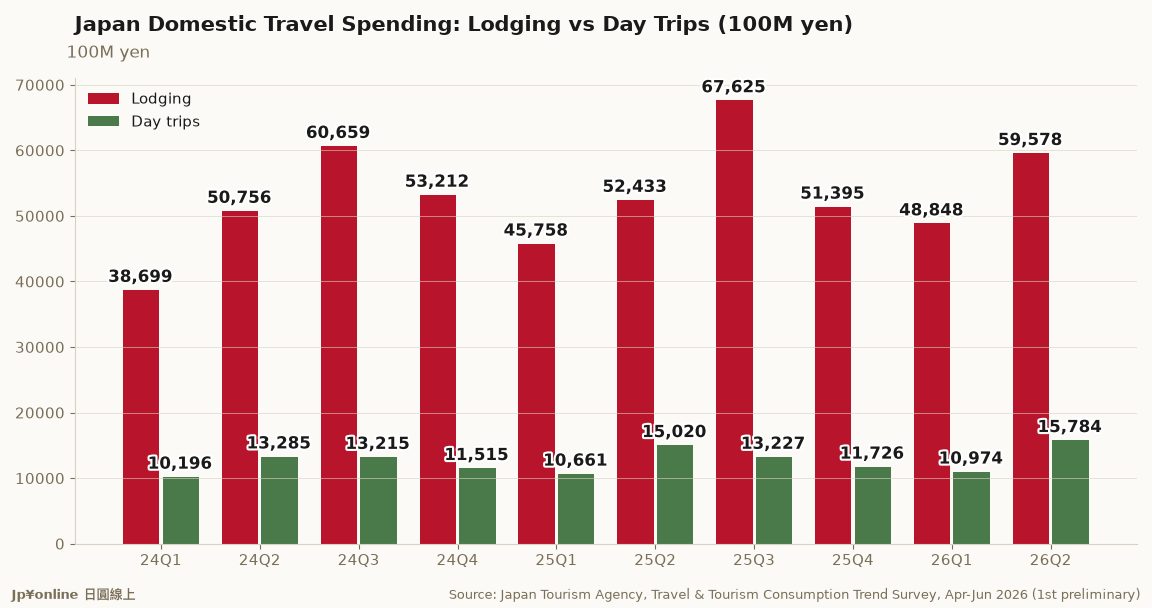
- Q1 (5.98T, +6.0%) → Q2 (7.54T yen, +11.7% YoY): pace doubled
- Lodging 5.96T (+13.6%), day trips 1.58T (+5.1%); lodging is 79.1% of the total
- Total trips 149.58M, +3.3%: trips up modestly, spending up sharply — price-led
- Monthly peak in Golden Week May (3.01T, +10.1%); April +16.9%, June +9.0%
- Domestic demand led this quarter, versus near-zero inbound growth (+0.2%)
The domestic-demand line accelerated: Q1 was 5.98T yen (+6.0% YoY), and Q2 (1st preliminary) surged to 7.54T yen (+11.7% YoY) — double the pace. Japanese domestic travel demand is now expanding faster than inbound spending.
Previous → current: Q1 2026 domestic travel spending was 5.98T yen (+6.0% YoY); Q2 (1st preliminary) was 7.54T yen (+11.7% YoY), double the prior quarter's pace. Lodging trips were 5.96T yen (+13.6%), day trips 1.58T yen (+5.1%).
Four benchmarks: (1) vs Q2 last year (6.75T yen), +11.7%; (2) vs Q1, seasonally higher (spring is peak); (3) lodging share 79.1%, still the core; (4) total trips 149.58M, +3.3% — trips up modestly, spending up sharply, so growth is price-led.
By month, Q2 spending ran 2.27T yen in April (+16.9%), 3.01T in May (+10.1%) and 2.26T in June (+9.0%), with Golden Week's May the peak. Double-digit lodging growth (+13.6%) is the strongest engine — Japanese are not just traveling more but paying more to stay, in sharp contrast to near-zero inbound spending growth (+0.2%) over the same quarter.
Of tourism's two engines, domestic demand led this quarter. A weak yen suppresses outbound and keeps budgets onshore; with rising prices and room rates, domestic spending cleared the 7-trillion-yen mark. For lodging and regional operators, this is a steadier, larger base than inbound. Previous: 'Domestic Travel Spending Q1 2026: 5.98T yen, +6.0%'.