Domestic vs Inbound Q2 2026: Domestic 7.54T Yen vs Inbound 2.51T, Domestic Share Rises to 75.0%A · FULL TRANSLATION
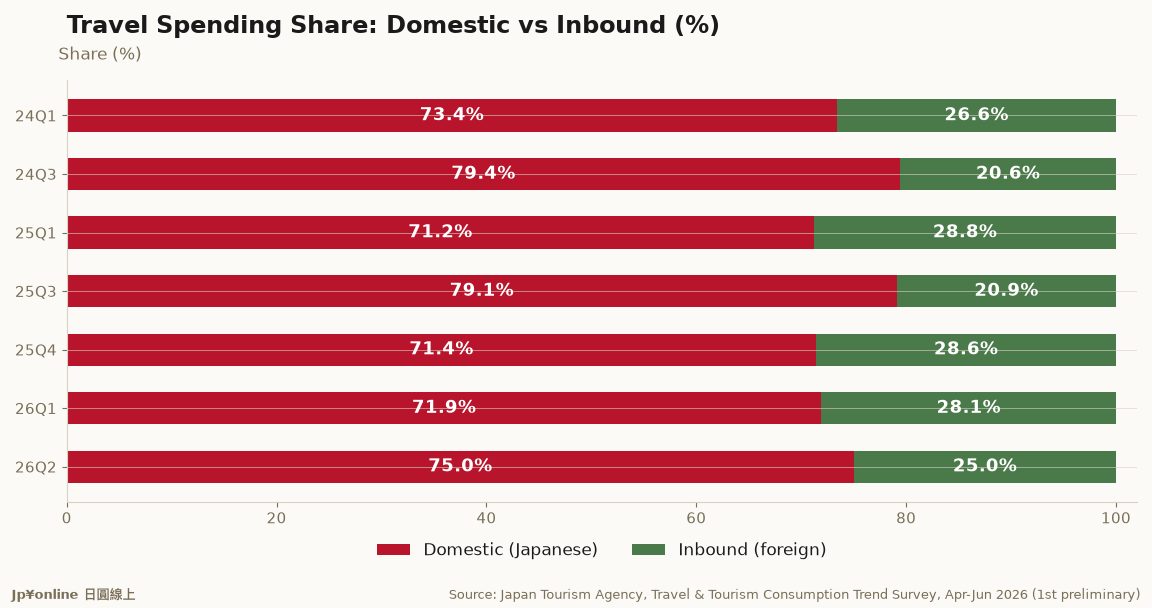
- Q1 71.9% domestic → Q2 75.0% domestic: a 3.1-point tilt homeward in one quarter
- Q2 domestic 7.54T yen vs inbound 2.51T yen, combined 10.05T — a same-quarter high
- Cause: domestic +11.7% vs inbound +0.2% (China's collapse drags inbound spending)
- Inbound share fell from 28.1% to 25.0%; domestic is now three-quarters of the total
- Weak yen's double edge: enlarges domestic, stalls inbound, tilts the balance home
The domestic-vs-inbound line tilted markedly homeward: Q1 was 71.9% domestic / 28.1% inbound, and Q2 (domestic 7.54T yen, inbound 2.51T yen) lifts the domestic share to 75.0%. The reason: domestic surged 11.7% while inbound was nearly flat (+0.2%).
Previous → current: Q1 2026 was 71.9% domestic / 28.1% inbound; Q2 saw domestic 7.54T yen and inbound 2.51T yen, a combined 10.05T yen, lifting domestic to 75.0% and cutting inbound to 25.0% — a 3.1-point tilt homeward in one quarter.
The cause is clear: domestic travel spending rose 11.7% while inbound rose just 0.2%, essentially flat. Inbound stalled mainly because China — the largest share — was halved (July inbound arrivals -56.1% YoY), dragging total inbound spending even as Taiwan and Korea spent more.
Four benchmarks: (1) domestic share 71.9%→75.0%, +3.1 points in a quarter; (2) inbound share 28.1%→25.0%; (3) domestic +11.7% vs inbound +0.2% YoY; (4) combined market 10.05T yen, another same-quarter high.
Markets treat inbound splurging as the star of Japanese tourism, but this line keeps reminding us that Japan's own domestic travel is the real base — three-quarters of the total this quarter. The weak yen's double edge is clearest here: it suppresses outbound and keeps budgets home (enlarging domestic), while China and FX headwinds stall inbound spending. For lodging and tourism investment, the risk-resilient domestic base deserves more weight than volatile inbound splurges. Previous: 'Domestic vs Inbound Q1 2026: domestic 5.98T vs inbound 2.34T, 71.9% domestic'.