Foreign Residents Moving Out of Central Tokyo: Key Takeaways from the 2025 Resident Population Mobility ReportA · FULL TRANSLATION
- Foreign domestic moves hit new highs at: city wards (662,000 people +9.5%), prefectures (367,000 +9.8%), and intra-prefectural areas (295,000 +9.2%)
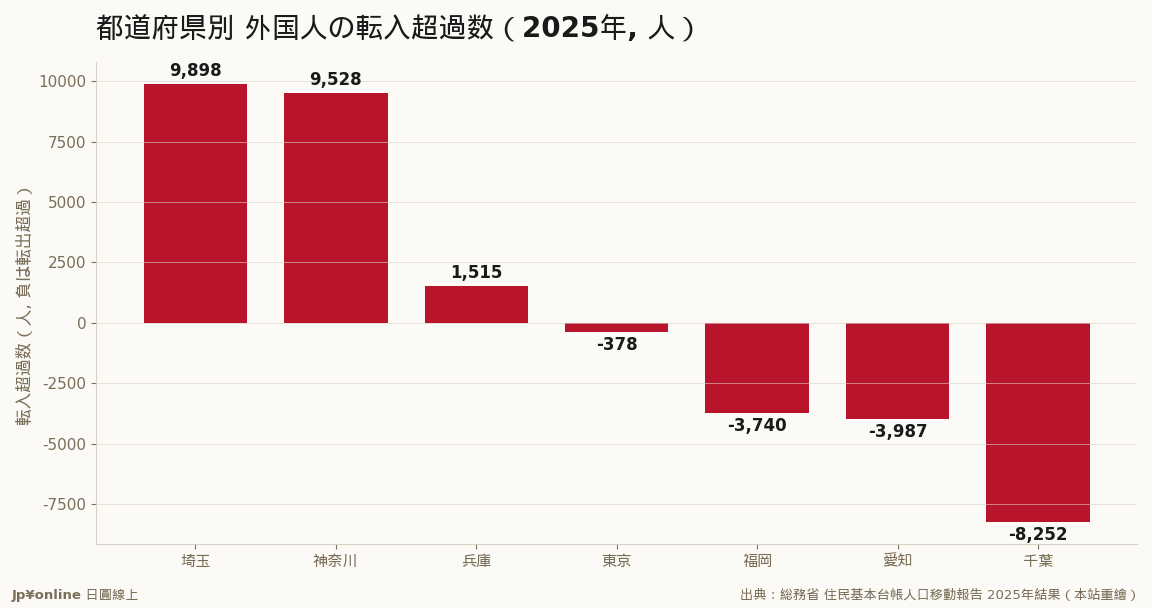
- Tokyo saw a net outflow for the first time (-378 people)
- Saitama and Kanagawa saw significant increases with 9,898 and 9,528 new arrivals respectively; Chiba experienced the highest departures of -8,252
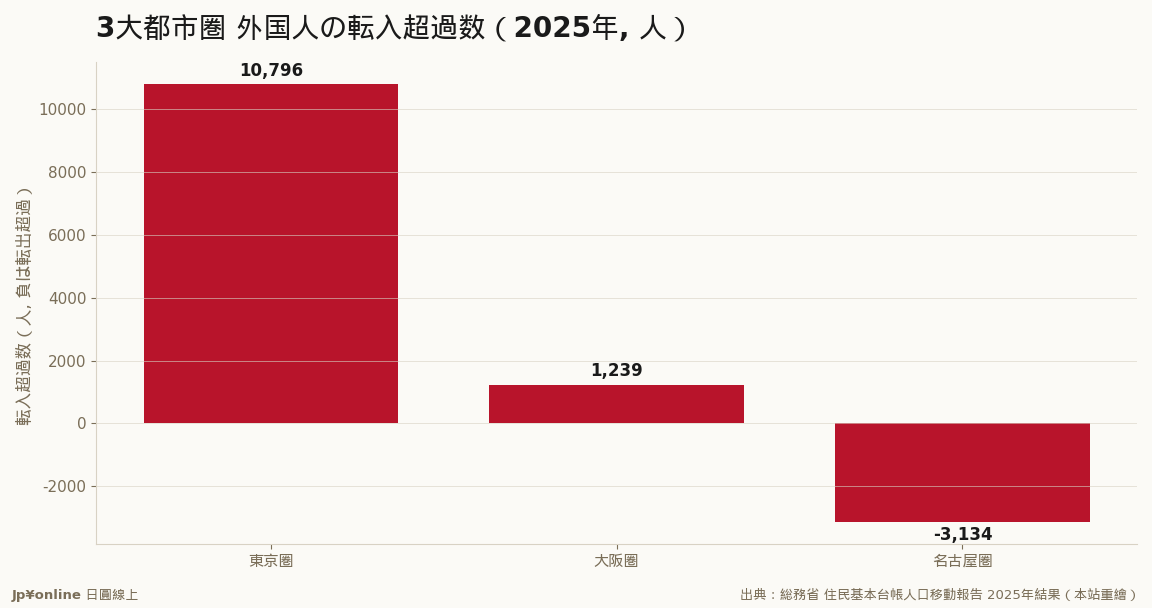
- Osaka’s foreign resident inflow turned positive for the first time in three years (+1,239 people)
- The shift affects real estate rentals, services for foreigners, and labor supply
The 2025 resident population mobility report reveals a significant shift in foreign residents' living locations within Japan. The scale of domestic moves by foreigners reached its highest level since 2014 (662,000 people in city wards up 9.5%), but for the first time, there was a net outflow from Tokyo to surrounding prefectures like Saitama and Kanagawa, with Osaka seeing its first positive change in three years. This trend highlights that foreign residents are following the pattern of Japanese citizens moving out of central areas due to high costs. For real estate investors and service providers targeting foreign residents, this map of where foreigners live is crucial for rental income and store traffic.
【Conclusion】The latest resident population mobility report from the Ministry of Internal Affairs and Communications (MIC) shows a significant shift in foreign residents' living locations within Japan. The scale of domestic moves by foreigners reached its highest level since 2014, with a 9.5% increase to 662,000 people moving between city wards. However, for the first time, there was a net outflow from Tokyo (a decrease of 378), pushing people to Saitama and Kanagawa as well as Osaka, which saw its first positive change in three years.
【Key Indicators】Foreign residents' moves within Japan hit new highs: city wards at 662,000 (+9.5%), prefectures at 367,000 (+9.8%), and intra-prefectural areas at 295,000 (+9.2%). This reflects the high mobility of foreign residents, who are sensitive to changes in rental costs and job opportunities.
【Detailed Analysis】The most dramatic shift was in Tokyo, where there was a net outflow for the first time. Saitama saw the largest increase with 9,898 new arrivals (up 2,178), followed by Kanagawa. In contrast, Chiba experienced the highest number of departures (-8,252) and Aichi had -3,987. This trend suggests that foreign residents are following Japanese citizens in moving out of central areas to more affordable locations.
【Impact on Business】Foreign residents' location shifts affect three types of businesses: rentals, services for foreigners (grocery stores, restaurants, language tutoring, and administrative assistance), and labor supply. Areas like Saitama and Kanagawa are seeing increased demand from foreign renters, while Tokyo's central areas are facing higher vacancy risks due to rising rents.
【Counterarguments】Three important reminders: 1) Net outflow does not mean leaving the Greater Tokyo Area; it is more about intraregional suburbanization. 2) The absolute number of foreign residents moving remains small compared to the total population, indicating this is a trend rather than a structural change. 3) Foreign residency data is highly influenced by visa policies and economic conditions, so any reversal in the weak yen or tighter regulations could impact the outflow pattern.
【Historical Context】The long-term trajectory of domestic foreign resident mobility shows steady growth since 2014, with significant increases post-pandemic. The net inflow into the Greater Tokyo Area, Osaka, and Kansai has increased annually over several years but is shifting from a dominant Tokyo model to one that includes greater contributions from Osaka.