Tokyo Central Area Luxury Properties See Supply Surge, High-Rise Contract Rate Reaches 80.78% Amid Rising Rates and Weak YenA · FULL TRANSLATION
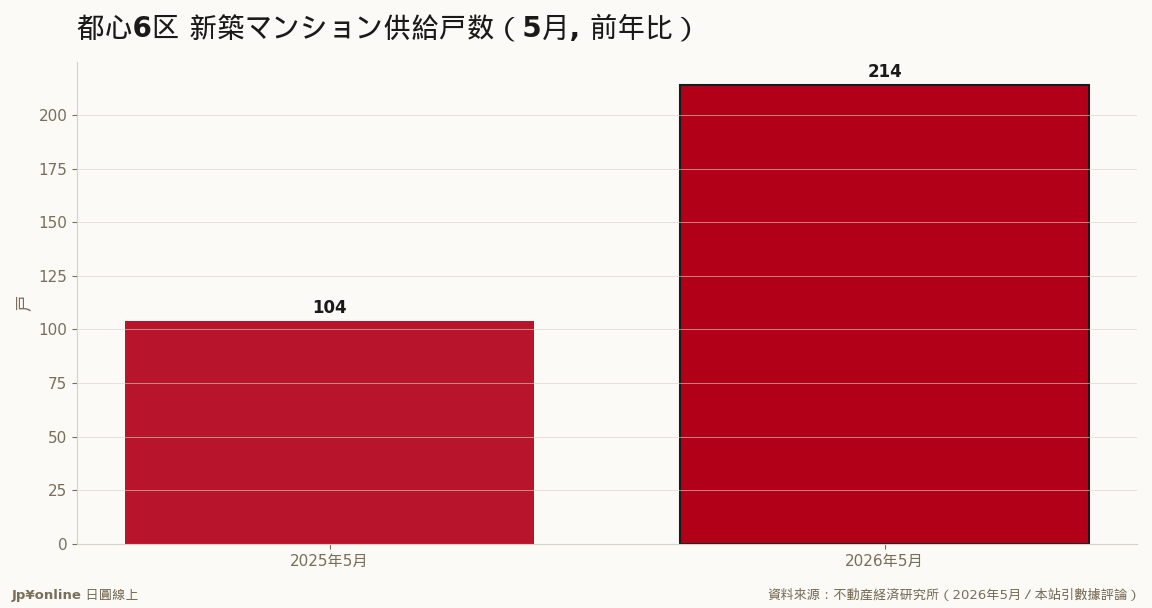
- Supply of six central districts (Chiyoda, Chuo, Ginza, Shinjuku, Bunkyo, Shibuya) was 214 units this May compared to just 104 last year
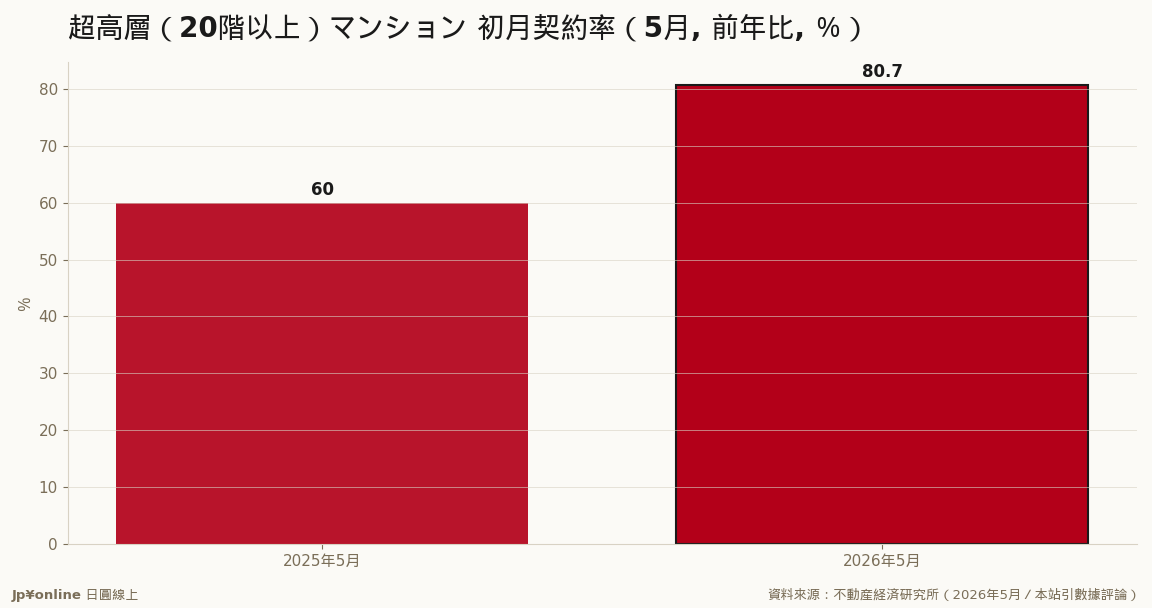
- High-rise initial contract rate reached 80.7% in May, up from 60% last year with number of units doubled (205 to 435)
- Despite doubling supply, average total price was slightly lower than last year's 233.32 million yen
- Buyers are mostly investors or companies for asset preservation, less sensitive to interest rates, more focused on exchange rates and stock markets = leading indicator of capital market sentiment; May sales still strong = capital supporting Tokyo luxury properties
- Practical advice: Watch contract rates in central districts as leading indicators, sensitive to exchange rate and stock market movements (weak yen is a tailwind but recovery may hit this segment first), average total price decrease is due to unit size changes, not a market downturn
In the latest Real Estate Economic Institute (REINS) May report, two key indicators for high-end buyer strength in central Tokyo are highlighted: the six central districts (Chiyoda, Chuo, Ginza, Shinjuku, Bunkyo, Shibuya) saw a supply of 214 units this May compared to just 104 last year, doubling. The average price per unit was 213.72 million yen with a price per tsubo at 3.21 million yen. For high-rise buildings (over 20 floors), the initial contract rate reached an impressive 80.7%, up from 60% last year, with the number of units jumping from 205 to 435. Central Tokyo supply has doubled but average total price is slightly lower than last year's 233.32 million yen, and the square meter price has dropped from 3.41 million yen to 3.21 million — not because of a market downturn, but due to different building plans this year with smaller unit sizes and higher floors. The unique perspective: the buyers in these central areas are different—most are investors or companies for asset preservation rather than residents—and they are less sensitive to interest rates, focusing more on exchange rates and stock markets. Despite the rising interest rates and weak yen, sales of luxury properties remain strong, indicating that capital is still supporting this segment.
【Why Taiwanese readers should care】The latest May report from Real Estate Economic Institute (REINS) reveals two key indicators for high-end buyer strength in central Tokyo: the six central districts (Chiyoda, Chuo, Ginza, Shinjuku, Bunkyo, Shibuya) and high-rise buildings (over 20 floors). In May, there were 214 new units supplied compared to just 104 last year, doubling. The average price per unit was 213.72 million yen with a price per square meter at 3.21 million yen (about 1.06 million yen per tsubo). The initial contract rate for high-rise buildings reached an impressive 80.7%, up from 60% last year, and the number of units doubled to 435. This indicates that despite the mixed signals from rising interest rates and a weak yen, the luxury market in Tokyo is not cooling but rather heating up.
【Breaking Down the Numbers】The six central districts represent the pinnacle of prices in Tokyo: with an average price per unit of 213.72 million yen for May's 214 units at a square meter price of 3.21 million yen (about 1.06 million yen per tsubo). It’s noteworthy that despite doubling supply, the average total price has slightly decreased from last year’s 233.32 million yen and the square meter price has dropped from 3.41 million to 3.21 million—this is not due to a market downturn but rather different building plans this year with smaller units and higher floors, further proving that averages can be influenced by structural factors. The true buyer strength lies in the contract rate.
The initial contract rate for high-rise buildings rose from 60% last year to an impressive 80.7%, with a doubling of the number of units (205 to 435). This indicates that buyers are keen on this segment, able to take up more supply. Overall, the central Tokyo area had an 80.7% contract rate for high-rise buildings in May, much higher than the overall 64.9%.
【Unique Methodology Perspective: Luxury Properties as Leading Indicators of Capital Markets】Buyers in the central districts and high-rises are different—most are investors or companies preserving assets, with less sensitivity to interest rates, more focused on asset allocation and exchange rates. This segment often leads market trends, not just for residential buyers. In May, the high-rise contract rate reached 80.7%, even as supply doubled; this indicates that capital is still supporting luxury properties in central Tokyo.
【Taiwanese Readers’ Practical Advice】Firstly, the six central districts and high-rises serve as a leading indicator of the overall market's health—watching contract rates here will give you earlier insights into changes compared to suburban markets. Secondly, buyers are less sensitive to interest rates but more sensitive to exchange rates and stock markets; weak yen is beneficial for foreign capital entry, but if the yen strengthens or stocks fall, this segment may be the first to cool down. Lastly, while average total price has decreased slightly due to unit size changes, focusing on square meter prices (321,000 yen per tsubo and still the highest in the Greater Tokyo Area) gives a more accurate picture.
【What to Watch】Firstly, monitor if the high-rise contract rate can stay at 80% or dilute with increased supply. Secondly, watch whether the square meter price in central areas drops below 321,000 yen. Lastly, observe if an exchange rate rebound and stock market downturn cause a cooling off of luxury buyers as early warning signs for high-end real estate trends in Greater Tokyo.