January Office Rental Report: Tokyo Core Areas Show Continued Tight MarketA · FULL TRANSLATION
- January 2026 vacancy rate at 2.15% (11 consecutive months low), average lease rate is 21,648 yen per square meter (24 consecutive month increase), signaling a landlord market in central Tokyo
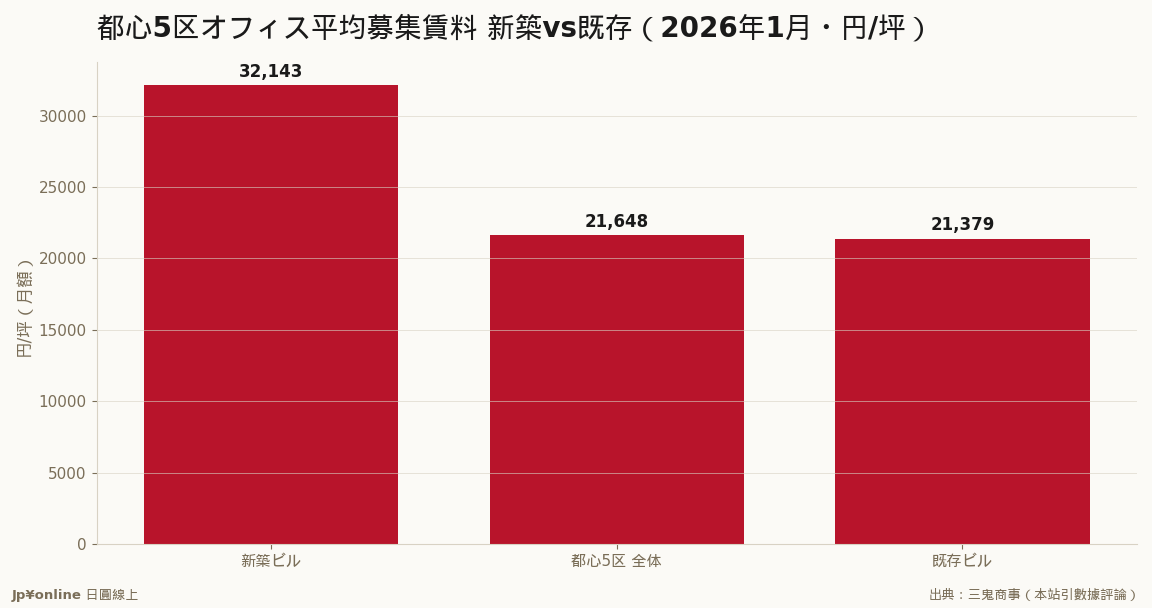
- Rental increases driven by new construction: new buildings rent at 32,143 yen/sq m vs. existing ones at 21,379 yen (difference of about 10,000 yen)
- The 'duration of continuous increase' is a market inertia indicator – 24 consecutive months indicates landlords hold pricing power for two years until new supply volumes or demand weakness changes this
- To predict turning points, focus on the vacancy rate in newly built properties (6.45%) – watch when it noticeably decreases (overheating) or increases (inventory absorption slowdown)
- Practical advice: monitor both lease rate duration and new construction vacancy rates; enter Japan early by securing existing space or budgeting for high-end new constructions; assess REITs based on 2026 supply absorption
Continuing the previous month's trend, in January 2026, according to Sankei Shoji, office rental rates in central five districts of Tokyo have seen a second consecutive 24-month rise. The vacancy rate has dropped for eleven consecutive months to 2.15%. The average lease rate is now at 21,648 yen per square meter, continuing an increase over the past 24 months. New supply continues to drive the trend with new constructions commanding a much higher rent than existing buildings. With vacancy rates hovering near zero for existing buildings and high occupancy in newly built structures, landlords still hold significant pricing power in the market.
【Why Taiwanese Investors Should Care】 Continuing from December 2025 data, Sankei Shoji's January 2026 office rental report for central five districts of Tokyo records a second consecutive monthly increase. The vacancy rate is now at 2.15%, and the average lease rate stands at 21,648 yen per square meter, both figures showing a 24-month continuous rise. This trend indicates that the office market in the Greater Tokyo Area remains favorable for landlords as we enter 2026.
【Detailed Analysis】 The key focus is on the continuity of lease rates and their structure. The average rate at 21,648 yen per square meter has seen a continuous rise over 24 months, but the increase comes mainly from new construction: New buildings command a rental rate of 32,143 yen per square meter, while existing ones are at 21,379 yen. The vacancy rates remain polarized – at 6.45% for newly built properties and only 2.04% for existing ones. With the supply market tighter than in December (where existing buildings were at 2.14%), most rental opportunities now concentrate on new constructions.
【A Unique Methodological Perspective: The 'Duration of Continuous Increase' as a Market Inertia Indicator】 To gauge how long office lease rates can continue to rise, it's more effective to monitor the 'duration of continuous increase' rather than guessing absolute numbers. A 24-month continuous increase means landlords have held pricing power for two years. This inertia will likely persist until new supply volumes increase or demand weakens.
【Opportunities and Risks】 The continuous 24-month rise in lease rates benefits landlords and REITs, but poses a challenge for companies seeking office space (including Taiwanese businesses in Japan), as the existing vacancy rate is extremely low. Demand is driving occupancy in existing buildings to full capacity while gradually absorbing new supply. For investors, this trend signals that continued high demand could lead to diminishing returns.
【Practical Advice for Taiwanese Investors】 1. Monitor both the 'duration of continuous increase' and the vacancy rates for newly built properties to get a more accurate picture of market dynamics. 2. Given the tight supply in existing buildings, businesses planning to enter Japan should either secure existing space early or budget for high-end new constructions. 3. For evaluating REITs, focus on whether 2026's expected new supplies can be absorbed by current demand – a key indicator of how long this landlord-friendly market will persist.